There Is No Such Thing as a Normal Family

One of the things funeral celebrancy has reinforced for me is that there is no such thing as a normal family.
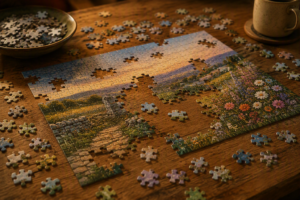
A partially completed jigsaw puzzle on a wooden table, with connected and unconnected pieces arranged around it.
Families rarely fit together neatly, but every family tells its own story.

It’s easy to look at other people’s lives and imagine that they are somehow simpler than our own. That other families don’t have tensions, disagreements, awkward histories or relationships that have become more complicated over time.

Yet when people begin talking about the person they have lost, a different picture often emerges.

Families are rarely straightforward

There are second marriages and blended families. Estranged siblings who haven’t spoken for years. Parent-child relationships that were loving, difficult, or sometimes both at the same time.

Former partners who remain important parts of the story. Friends who feel like family. Family members living on the other side of the world.

People trying their best to navigate old tensions whilst also grieving someone they loved.

In other words, families.

When someone dies, complexity doesn’t disappear

When someone dies, those complexities do not suddenly disappear. If anything, they can become more visible.

Different people may have different memories of the same person. They may have experienced different versions of them. They may have loved them deeply whilst also carrying hurts, disappointments or unfinished conversations.

The reality is that most lives are far too rich and complicated to fit neatly into a simple narrative.

Funerals don’t require perfect families

I think this is one reason why funerals matter.

At their best, they create space for honesty.

Not every story has to be polished. Not every relationship has to be described as perfect. Most families are not looking for perfection. They are looking for something that feels truthful.

What I often notice is that, beneath the details, people are usually trying to do the same thing.

They want the person they loved to be remembered well. They want the important stories to be told. They want others to understand something about who that person was.

They want to honour a life.

Sometimes that happens easily. Sometimes it requires patience, listening and careful conversation.

One of the privileges of this work is helping people navigate those conversations. Not by making differences disappear, but by creating space for different perspectives to exist alongside one another.

A different kind of normal

A funeral ceremony does not have to resolve every family difficulty.

It does not need to rewrite history.

It does not need to pretend that every relationship was straightforward.

What it can do is acknowledge a life honestly and create a moment where people come together to remember what matters to them.


This reflection sits alongside What Families Have Taught Me and Every Life Leaves Different Footprints, both of which explore the stories, relationships and memories that often shape funeral conversations.

If you’re planning a funeral, memorial ceremony or celebration of life, I’d be happy to help you tell the story of someone who mattered. You can find out more about my services or get in touch for an informal conversation.

Planning Ahead Is an Act of Love

For many people, even the thought of discussing funeral wishes feels uncomfortable. Some worry that raising the subject will upset their family. Others feel it is too early, too morbid or somehow tempting fate.

As a result, many of us put the conversation off.

We’ll talk about it later.

We’ll write it down another day.

We’ll get round to it eventually.

Often, though, later never quite arrives.

The questions families are left asking

When families gather after a death, one of the things I hear most often is not a lack of love.

It is a lack of information.

We don’t know what music they would have chosen.

We’re not sure what kind of ceremony they wanted.

Did they want to be buried or cremated?

Would they have preferred flowers or donations?

Was there a poem they loved?

A favourite song?

Some thoughts about what mattered most to them?

Families do their very best, of course. They make thoughtful decisions, support one another and create meaningful ceremonies.

But many tell me afterwards that they wish they had known just a little more.

Planning ahead isn’t about control

Planning ahead is sometimes misunderstood as an attempt to control the future.

I see it differently.

The future will always contain surprises. No plan can account for every circumstance, every family dynamic or every practical consideration.

The real value of planning ahead is not control.

It is kindness.

It is making things a little easier for the people who will one day have difficult decisions to make.

It is leaving clues.

Not instructions carved in stone, but helpful signposts.

The things worth leaving behind

A favourite piece of music.

A reading that has always meant something.

A few thoughts about the kind of atmosphere you would like.

The stories you hope people will remember.

The values you have tried to live by.

None of these things need to be formal.

A conversation over a cup of tea can be enough.

A note in a drawer.

A few bullet points in a notebook.

An email.

Questions about death, questions about life

Many people tell me that they don’t want a fuss.

That may be true.

But those left behind often need a way to express their love, grief and gratitude. Having some sense of your wishes can help them create something that feels right.

Planning ahead can also be a gift to ourselves.

It gives us permission to reflect on what matters.

What do we hope people will remember?

What have been the important chapters of our lives?

Who has shaped us?

What values would we like to pass on?

These are not simply questions about death.

They are questions about life.

Starting the conversation

One of the things I appreciate about Humanist ceremonies is their focus on the individual life that has been lived. Every person is different. Every story is unique.

Planning ahead offers the opportunity to think about your own story and the legacy you leave behind, whether that legacy is found in achievements, relationships, values, laughter, kindness or all of these things combined.

It doesn’t need to be completed all at once.

It doesn’t have to be perfect.

You don’t need to have every answer.

Sometimes the most important step is simply beginning the conversation.

Planning ahead is not about controlling what happens after we are gone.

It is about helping the people we love when they need it most.

And perhaps that is one of the most thoughtful gifts we can leave behind.


You may also find Questions Your Loved Ones May Wish They Knew the Answers To helpful if you’re thinking about the conversations, wishes and memories that are often left unsaid until it is too late.

If you’re planning a funeral, memorial ceremony or celebration of life, I’d be happy to help you tell the story of someone who mattered. You can find out more about my services or get in touch for an informal conversation.

What Families Have Taught Me

When people discover that I am a funeral celebrant, they sometimes assume that I spend my time talking.

In reality, much of my work begins with listening.

Before I write a ceremony, before I think about readings or music, before a single word is written, I sit down with family and friends and invite them to tell me about the person they have lost.

People rarely need help remembering

At first, many people worry they won’t know what to say.

They apologise for being unprepared.

They tell me they don’t know where to begin.

Sometimes they worry that there wasn’t anything remarkable about the person who has died.

And yet, almost every time, something extraordinary happens.

Stories emerge.

A favourite saying.

A lifelong habit.

A memorable holiday.

An act of kindness that nobody had thought about for years.

The nickname everyone forgot to mention at first.

The awful jokes that somehow became part of family history.

The small details that made somebody uniquely themselves.

I’ve learned that most people don’t need help remembering.

They need permission to start.

Love, humour and complexity

Over the years, families have taught me many things.

They have taught me that love comes in countless forms.

Not every family looks the same. Not every relationship is straightforward. Some families are close-knit. Some are blended. Some are separated by distance, disagreement or years of complicated history.

Yet even within complexity, people often find ways to care for one another.

Families have taught me that humour doesn’t disappear when someone dies.

Many ceremonies contain laughter alongside tears. Sometimes remembering someone properly means remembering the things that made everyone laugh, even at difficult times.

There is no right way to grieve

Families have taught me that grief has no timetable.

Some people want to talk for hours.

Others need time and silence before memories emerge.

Some arrive convinced they won’t be able to speak at the ceremony and later find the courage to do so.

Others decide not to, and that is equally fine.

There is no right way to grieve.

The things people remember

Families have taught me that achievements matter, but they are rarely the whole story.

When people describe someone they loved, they do talk about careers, qualifications and accomplishments.

But they are just as likely to talk about generosity, loyalty, patience, determination, curiosity or kindness.

They talk about the friend who was always there.

The grandparent who never missed a birthday.

The neighbour who quietly looked after everyone else.

The person who always put the kettle on.

Again and again, I am reminded that a life is about much more than a list of achievements.

Every family teaches me something

Perhaps the most important thing families have taught me is that every life is unique.

No two ceremonies are ever the same because no two people are ever the same.

Every conversation is different.

Every set of memories is different.

Every family brings its own stories, traditions, challenges and joys.

That is one of the things I value most about this work.

It is a privilege to hear these stories and to help families shape them into a ceremony that reflects the person they knew and loved.

Every family teaches me something.

Every conversation reminds me that our lives are woven together through relationships, memories and shared experiences.

And every ceremony is an opportunity to honour that in a way that feels personal, authentic and true.


Many of the themes in this reflection connect with Every Life Leaves Different Footprints and There’s No Such Thing As A Normal Family, both of which explore the stories, relationships and memories that often emerge when families begin sharing stories about someone they love.

If you’re planning a funeral, memorial ceremony or celebration of life, I’d be happy to help you tell the story of someone who mattered. You can find out more about my services or get in touch for an informal conversation.

Every Life Leaves Different Footprints

footsteps on an empty beach at sunset

When families talk to me about the people they have loved, I often hear concerns about getting the details right.

Did we remember every milestone?

Have we included all the achievements?

What if we forget something important?

These are understandable worries. When someone has died, it can feel as though we have been given the impossible task of summing up an entire life in a matter of minutes.

But over time I’ve noticed something.

The things people remember

The things that matter most are not always the things people expect.

Of course, careers, achievements and qualifications can be important parts of a life story. We often talk about the jobs people did, the businesses they built, the causes they supported, the places they travelled and the contributions they made.

Yet when families begin to share memories, the conversation often takes a different turn.

They talk about the Sunday dinners.

The terrible jokes.

The holiday that went wrong.

The way someone sang loudly and badly in the car.

The neighbour who could always be relied upon.

The grandparent who never missed a football match, a dance recital or a birthday.

The friend who somehow knew exactly when to pick up the phone.

The person who made everyone feel welcome.

The person who never quite learned how to use technology.

The person who could fix anything.

The person who always put the kettle on.

The footprints we leave behind

These are the things that rarely make headlines, but they leave an impression that can last for decades.

Every life leaves footprints.

Some are visible in careers, achievements and public contributions.

Others are found in conversations, acts of kindness, shared laughter and quiet moments that only a handful of people ever witnessed.

Neither is more important than the other.

Both tell us something about who a person was and the difference they made.

What families often teach me

One of the privileges of being a celebrant is hearing these stories.

Again and again, I am reminded that lives cannot be measured by a single standard.

What matters to one person may be entirely different from what matters to another.

Some people leave behind remarkable achievements.

Others leave behind remarkable relationships.

Most leave behind a mixture of both.

What people never forget

What families remember is not necessarily what someone did.

More often, it is how that person made them feel.

Loved.

Supported.

Encouraged.

Accepted.

Understood.

Funny.

Safe.

Valued.

Those impressions become part of the people who remain. They influence the stories we tell, the values we hold and the way we live our own lives.

Perhaps that is one reason funerals matter.

They give us the opportunity to pause and recognise the footprints someone has left behind. Not just the obvious ones, but the smaller, quieter marks that may have shaped the lives of others in ways they never fully realised.

Every life leaves different footprints.

And every set of footprints is worth remembering.


You may also enjoy What Families Have Taught Me and There’s No Such Thing As A Normal Family, both of which explore the stories, relationships and memories that often emerge when people begin talking about someone they love.

If you’re planning a funeral, memorial ceremony or celebration of life, I’d be happy to help you tell the story of someone who mattered. You can find out more about my services or get in touch for an informal conversation.

Questions Your Loved Ones May Wish They Knew the Answers To

Most of us spend more time planning holidays, birthdays and Christmas than we do thinking about our own funeral.

That’s completely understandable. It isn’t always an easy subject to think about, let alone discuss.

But over the years, I’ve noticed that many families take comfort from having even a few clues about what someone might have wanted.

You don’t need a detailed plan. You don’t need all the answers. Sometimes a handful of thoughts can make a real difference to the people you leave behind.

Would you prefer burial, cremation or direct cremation?

This is often one of the first decisions families need to make.

Some people feel strongly about their preference. Others don’t mind. Either is perfectly fine, but sharing your thoughts can remove uncertainty for the people making arrangements on your behalf.

What kind of ceremony would feel most like you?

Would you prefer a religious ceremony, a Humanist ceremony, or something else?

Would you want something traditional, informal, reflective or celebratory?

There are no right or wrong answers. What matters is what feels authentic to you.

Is there music that matters to you?

Music has an extraordinary ability to bring memories flooding back.

Many families find great comfort in including music that was meaningful to the person they have lost.

If there are songs that make you smile, think, dance or remember important moments in your life, it can be helpful to share them.

Are there stories you would hope people would tell?

When people gather to remember a life, it is often the stories that stay with us.

The funny ones.

The unexpected ones.

The stories that capture something essential about who a person was.

You might not be able to choose exactly what people say, but you can think about the moments you would most like to be remembered.

What would you want people to know about you?

Not your job title. Not your achievements.

You.

What mattered to you?

What brought you joy?

What values guided your life?

What would you hope the people you love would remember years from now?

Are there people you would particularly want mentioned?

Many people have individuals who played a special role in their lives.

Sometimes simply making a note of those important relationships can help ensure they are recognised and remembered.

Do your family know where important information is kept?

This may not be the most romantic question, but it is often one of the most useful.

Things such as wills, passwords, insurance details and funeral wishes can be difficult to locate at an already stressful time.

A little organisation now can save a great deal of searching later.

You don’t need all the answers

Reading this list isn’t meant to create another item on your to-do list.

Many people never discuss these things in detail, and that’s okay.

But if this article prompts a conversation, a note in a drawer, or a few thoughts shared with the people you love, it may make things a little easier one day.

In my experience, families rarely need a perfect plan.

What they often value most is having some sense of what felt important to the person they are remembering.

Those conversations can be a gift in themselves.

If this article resonated with you, you may also find Planning Ahead Is an Act of Love helpful. Both explore the value of having conversations now that can make things easier for the people we care about later.

If you’re planning a funeral, memorial ceremony or celebration of life, I’d be happy to help you tell the story of someone who mattered. You can find out more about my services or get in touch for an informal conversation.

YOUR-IMAGE

Some of the most difficult decisions families make after a death are not practical ones.

They are the decisions that require them to answer a simple question:

“What would they have wanted?”

Sometimes the answer is obvious.

Often it isn’t.

The questions people wish they had asked

When families gather to plan a funeral, one of the things I hear most often is:

“I wish we’d talked about this.”

Not because people didn’t care.

Not because they were avoiding the subject.

But because life was busy.

And because many of us assume there will always be time later.

Families often find themselves wondering:

What music would they have chosen?

Was there a particular reading they loved?

Did they want burial or cremation?

Who would they have wanted involved?

What mattered most to them?

Small details can mean a great deal

It is rarely the grand decisions people struggle with most.

More often, it is the smaller personal details.

The song that always made them smile.

The poem they carried for years.

The place that mattered to them.

The stories they told over and over again.

Those details help families create ceremonies that feel personal and authentic.

These are really questions about life

Many of the questions families wish they knew the answers to are not really about funerals at all.

They are questions about values.

Relationships.

Memories.

Priorities.

What mattered.

What brought joy.

What someone hoped would be remembered.

In that sense, these conversations can be as much about life as they are about death.

Starting the conversation

The good news is that these conversations do not need to be formal.

They can happen over a cup of tea.

During a walk.

Around a kitchen table.

Through stories shared between generations.

You do not need all the answers.

Often the most important thing is simply beginning.

Because when the time comes, even a little guidance can make a significant difference to the people left behind.


You may also find Planning Ahead Is an Act of Love helpful. Both articles explore how conversations today can make things easier for the people we care about tomorrow.

If you’re planning a funeral, memorial ceremony or celebration of life, I’d be happy to help you tell the story of someone who mattered. You can find out more about my services or get in touch for an informal conversation.

What Speaking at My Mum’s Funeral Taught Me About Saying Goodbye

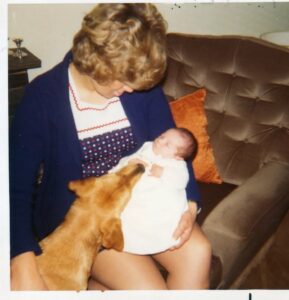
image of Kay as a baby with her Mum and the family dog, Brandy

What Speaking at My Mum’s Funeral Taught Me About Saying Goodbye

Long before I became a funeral celebrant, I found myself in a position that many families experience.

I had to help create and deliver a tribute for someone I loved.

My mum died at the age of 67 after living with Parkinson’s disease for 27 years.

It was a long and difficult journey. Like many progressive illnesses, Parkinson’s gradually changed aspects of her life and, in many ways, took her further away from the vibrant person she had once been.

As a family, we were obviously deeply sad when she died. At the same time, we were relieved that she was no longer suffering.

When it came to planning her funeral, I realised something important.

The tribute wasn’t really about the illness.

It was about her.

Remembering the whole person

One of the greatest gifts of writing a tribute is the opportunity to remind people who someone really was.

For a moment, Parkinson’s stepped into the background and Mum took centre stage once again.

We remembered the stories that made her uniquely herself.

Growing up on a farm and developing a lifelong fear of mice.

Being caught by a farmer while up a tree collecting holly for Christmas decorations.

Her wonderful cooking.

Her ability to get complete strangers to tell her their life story within minutes of meeting them.

The stories were funny, affectionate and instantly recognisable to those who knew her.

They reminded us of the person we knew and loved.

Laughter and tears belong together

One thing that surprised me was how much laughter there was.

Of course people cried.

Funerals are sad because someone we love is no longer with us.

But people laughed too.

The stories prompted smiles, chuckles and moments of shared recognition.

For me, that experience reinforced something I still believe today.

A meaningful funeral doesn’t need to choose between sadness and celebration.

Often the most powerful ceremonies contain both.

Perfection isn’t what people remember

Families sometimes worry about getting every detail exactly right.

They wonder whether they have chosen the right music, the right readings or the right words.

My experience with Mum’s funeral taught me that people rarely remember whether every detail was perfect.

What they remember is whether the ceremony felt true to the person who has died.

They remember hearing the stories. They remember recognising the person in the tribute. They remember feeling that the ceremony captured something important about a life that mattered.

What I carry into my work today

That experience continues to shape how I work with families.

My aim is never to create a perfect ceremony.

My aim is to create an honest one.

A ceremony that reflects the person who has died, acknowledges the reality of loss, and gives family and friends an opportunity to come together and remember.

Every life is different.

Every family is different.

But the lesson I learned from speaking at my mum’s funeral remains the same.

What matters most is not perfection.

What matters most is creating something that feels true.


Some of the themes in this reflection continue in Every Life Leaves Different Footprints and What Families Have Taught Me, both of which explore what families teach us about love, memory and the lives of the people they cherish.

If you’re planning a funeral, memorial ceremony or celebration of life, I’d be happy to help you tell the story of someone who mattered. You can find out more about my services or get in touch for an informal conversation.